pulmonology
Lung Cancer Detection from Climate Change
Investigating the correlation between climate change indicators and lung cancer incidence using machine learning models.
The lab is currently working on 14+ active projects at the intersection of data science, environmental monitoring, and digital healthcare, building robust models for complex ecological and biological systems.
Investigating the correlation between climate change indicators and lung cancer incidence using machine learning models.
Evaluating Restless Leg Syndrome, Neuromyelitis Optica Spectrum Disorder, and Multiple Sclerosis through computational approaches.
Mapping the gut-brain axis via deep learning to identify Depression & Anxiety biomarkers.
Developing autonomous AI agents to assist and enhance precision in robotic surgical procedures.
Real-time monitoring of air pollutants using IoT devices and predictive data analytics.
Applying artificial intelligence to hydrological modeling, including hydrographs of Baluchistan rivers from ML.
Climate change detection from remote satellite data and machine learning models.
Researching environmentally friendly materials, e.g., from waste rubber, to promote circular economy principles.
Developing sustainable strategies to reduce noise pollution in urban environments.
Evaluating climate change impact from business practices, carbon footprint calculations, and sustainable finance taxonomies.
Developing computational models for sediment management in water bodies.

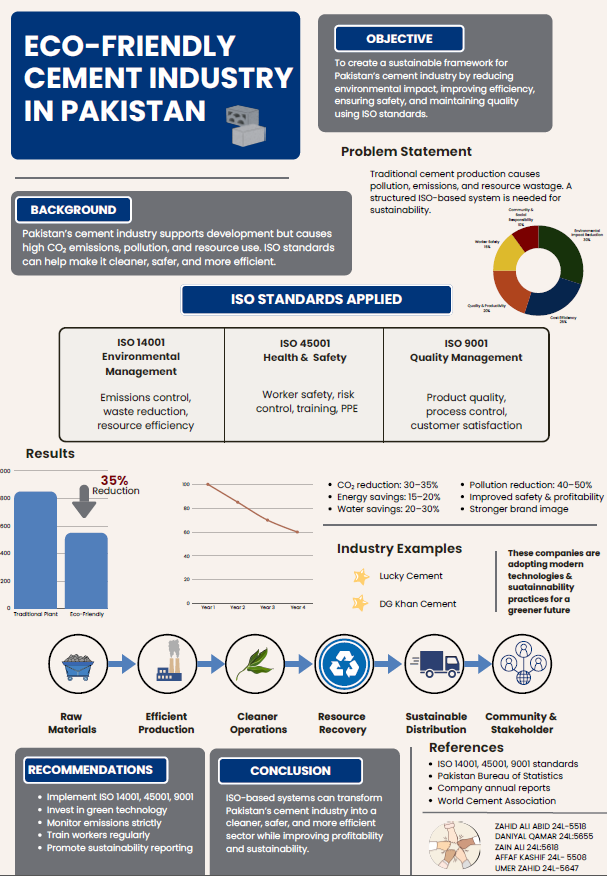
Developed a sustainable business framework under compliance of GRI standards, ISO & UNGC standards by evaluating Life Cycle Assessments of products.
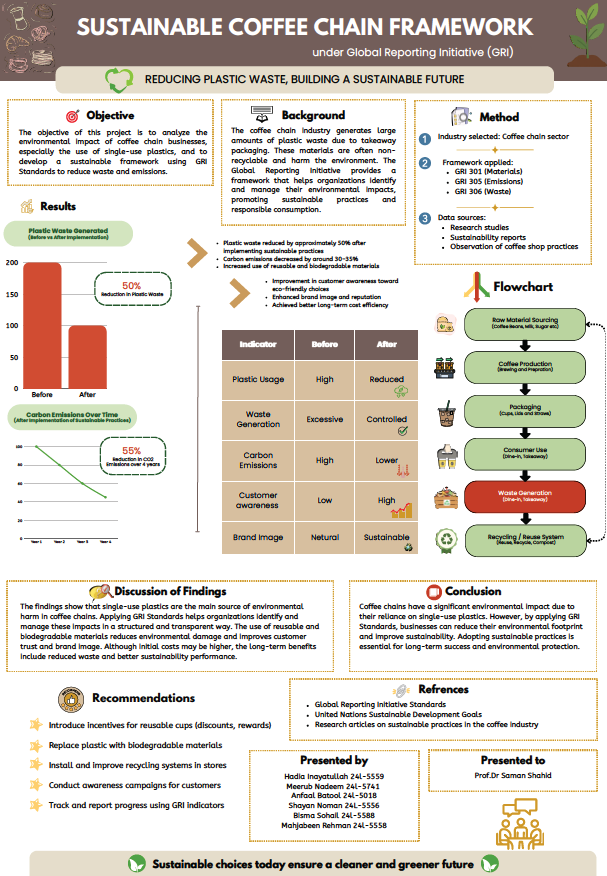
Circular economics and symbiotic associations to reduce waste generation, sustainable finance, and key performance indicator development for net carbonization.
Implementation of Algorithm for Retrieval of Aerosol from Satellite Data and Comparison with MODIS Standard Aerosol Product
Implementation of Algorithm for Retrieval of Thermal Anomalies from Satellite Data and Comparison with Standard MODIS Product
Consultant for 'Development of TCP Accelerator for GEO satellite communication' — Funded by RESOLVE-SUPARCO
Introduced Environmental Data Science (EDS) as an elective course covering environmental monitoring, IoT, remote sensing, ArcGIS, and ML/DL models